

Thinking of switching from glasses to contact lenses? Whether you're looking for more freedom during activities or simply want to try something new, contact lenses could be the right choice for your vision.
If you are short-sighted, you are probably already familiar with the usual side of myopia treatment: glasses, contact lenses, and keeping up with your eye tests. But something that does not get talked about nearly enough is how much your everyday habits can influence the way myopia develops and progresses, especially in children.
That is not to say lifestyle changes can replace professional treatment. They absolutely cannot. But the right daily habits, sitting alongside expert clinical care, can make a real difference to the environment your eyes are working in.
It helps to understand what is actually happening when myopia gets worse.
Short-sightedness occurs when the eyeball grows slightly too long, which means light ends up focusing just in front of the retina rather than directly on it. That is why distant objects look blurry. It tends to develop during childhood and can continue to worsen through the teenage years as the eye keeps growing.
This is why myopia treatment in children is about more than just getting the right prescription. It is about slowing down that process of eye growth, protecting vision in the long run, and reducing the risk of more serious problems further down the line, such as glaucoma, retinal detachment, or macular degeneration.
The encouraging thing is that there are steps you can take, whether you are a parent managing this for your child or dealing with your own short-sightedness, to genuinely support that process.
It does, and this is probably the lifestyle factor with the strongest research behind it.
Study after study has found that children who spend more time outside are less likely to develop myopia in the first place, and those who are already diagnosed tend to see slower progression. The most widely accepted explanation is that natural daylight triggers the release of dopamine in the retina, which plays a role in regulating how the eye grows. And the intensity of outdoor light, even on a grey British day, is far greater than anything you will encounter indoors.
Most optometrists working in this area suggest aiming for around 90 minutes of outdoor time per day for children. It does not need to be a sport or structured activity. A walk, time in the garden, or simply being outside all count. Natural light exposure is what matters, not what they are doing in it.
For children already receiving clinical myopia treatment, building outdoor time into their daily routine is one of the easiest and most accessible things you can do to support what is happening clinically.
This is one of the questions we hear most often, and it is a fair one given how much time children spend on devices these days.
The honest answer is that it is not quite as straightforward as screens being the villain. Screen use itself has not been proven to directly cause myopia. What does seem to be a contributing factor is prolonged near work, which means anything that keeps the eyes focused up close for long stretches, whether that is a smartphone, a book, or a worksheet. It is the sustained close focus that appears to matter, not the screen itself.
So the goal is not to ban devices but to manage how they are used.
The 20-20-20 rule is worth getting into the habit of: every 20 minutes of close-up work, look at something at least 20 feet away for around 20 seconds. It sounds simple because it is, but it gives the eye muscles a chance to relax rather than staying locked in close focus for hours at a time.
Keeping screens at a sensible distance from the face, sitting properly rather than hunching over a device, and making sure there are regular, proper breaks all help create a healthier visual routine, particularly for children whose eyes are still developing.
To be clear upfront: no food or supplement will reverse myopia. Diet is not a myopia treatment in its own right. But there is some interesting emerging evidence around the role certain nutrients play in how the eye develops and functions.
Vitamin D is one that comes up a lot in this area. Given that it is produced through sun exposure, there may well be a link between lower vitamin D levels and increased myopia risk, particularly in children who spend a lot of time indoors. Oily fish, eggs, and fortified foods are all decent dietary sources, and a GP can advise if you are concerned about levels.
Omega-3 fatty acids, found in fish, flaxseeds, and walnuts, support the surface health of the eye and can help with dry eye symptoms, which is worth bearing in mind for anyone wearing contact lenses as part of their myopia treatment.
None of this is transformative on its own, but a balanced diet supports the body as a whole, and the eyes are no exception to that.
This one gets overlooked a lot, but how and where you read genuinely matters.
Poor lighting makes the eyes work harder to pick out contrast and detail. It is not going to cause myopia directly, but it does increase visual strain unnecessarily. Making sure there is good, even lighting when reading or doing close work is a small and easy habit to get right.
Posture is worth paying attention to as well. Holding a book or device too close to the face shortens the viewing distance and puts more demand on the eyes. Encouraging children to keep reading material around 30 to 40cm away, and to sit upright rather than curling over a device on the sofa, helps maintain a much more comfortable focal distance throughout the day.
None of this is complicated or expensive. Applied consistently alongside proper myopia treatment, these things genuinely add up.
All of that said, it is important to be straightforward about what lifestyle changes can and cannot do.
They can support your myopia treatment. They cannot replace it. If your child is showing signs of short-sightedness, or if your prescription has been creeping up year on year, the most important thing is to see a qualified optician and explore your clinical options properly. The earlier that happens, the better.
At Pabari Opticians, we offer Essilor Stellest lenses, which are among the most clinically advanced myopia management solutions available right now. The clinical evidence behind them is genuinely impressive. Stellest lenses have been shown to slow myopia progression by 67% on average compared to standard single-vision lenses when worn for 12 hours a day, and in Essilor’s own trials, nine out of ten children wearing them experienced eye growth similar to or slower than non-myopic children after just the first year.
That is not something lifestyle changes alone can achieve. But pair effective clinical treatment with the right daily habits, and you are giving your child’s vision support from every angle.
If you are worried about your child’s vision, looking into myopia management options, or simply want a conversation with someone who knows their stuff, we are always happy to help.
Pabari Opticians has been providing expert, family-focused eye care in Birmingham for over 40 years. We take the time to get to know you and your needs, and we will always give you honest advice, whether you are coming in for a routine eye test or exploring specialist myopia treatment for the first time.
Give us a call on 0121 449 0845 or pop in to see us at 14 St Mary’s Row, Moseley, Birmingham. We would love to hear from you.
We understand the importance of your eye health. How well you can see and how good you look really matters to you, and it really matters to us too.
View all
We stock quality eyewear from and use the most advanced individual lenses on the market.
View all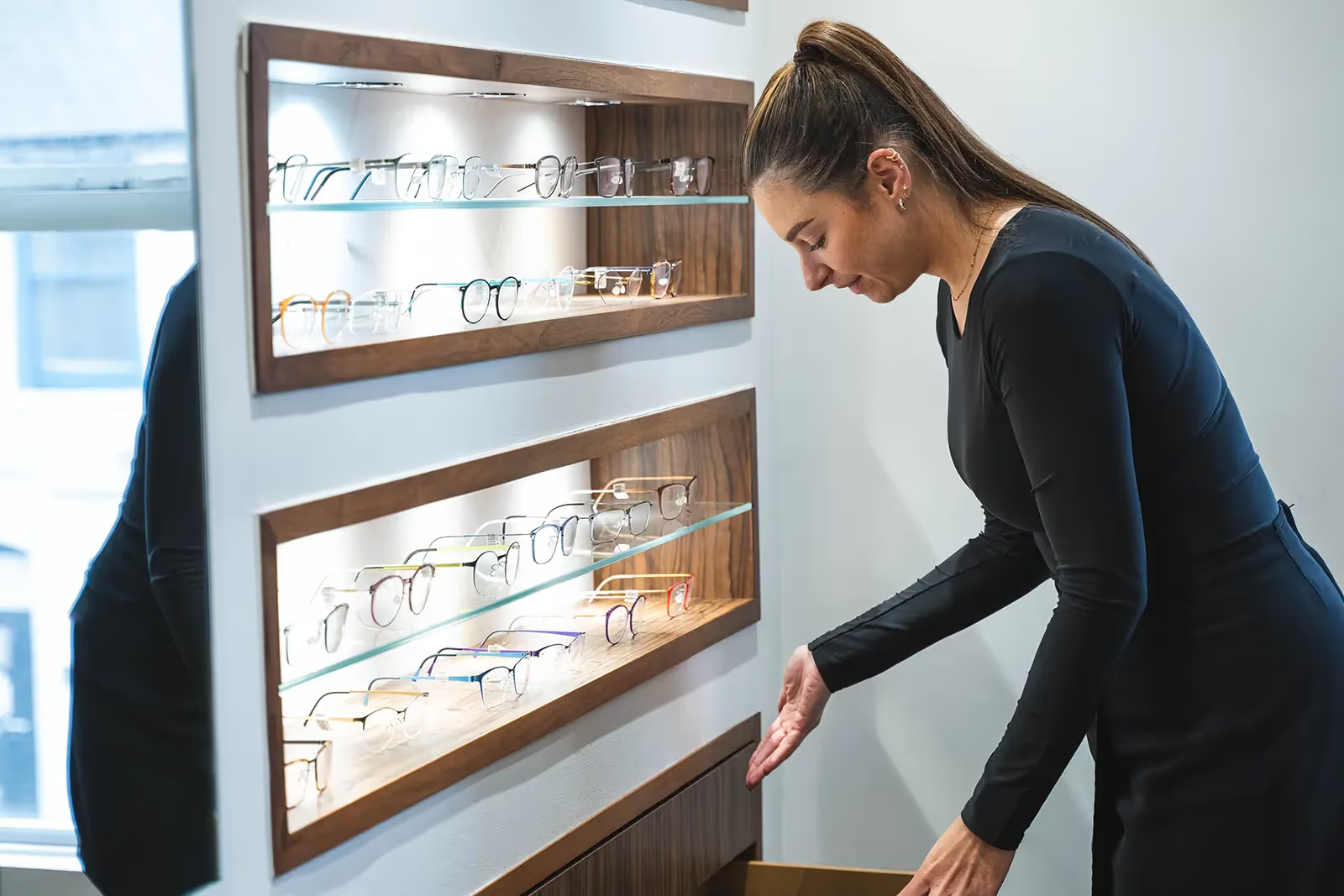
Explore Our Range of Stylish Designer Eyewear

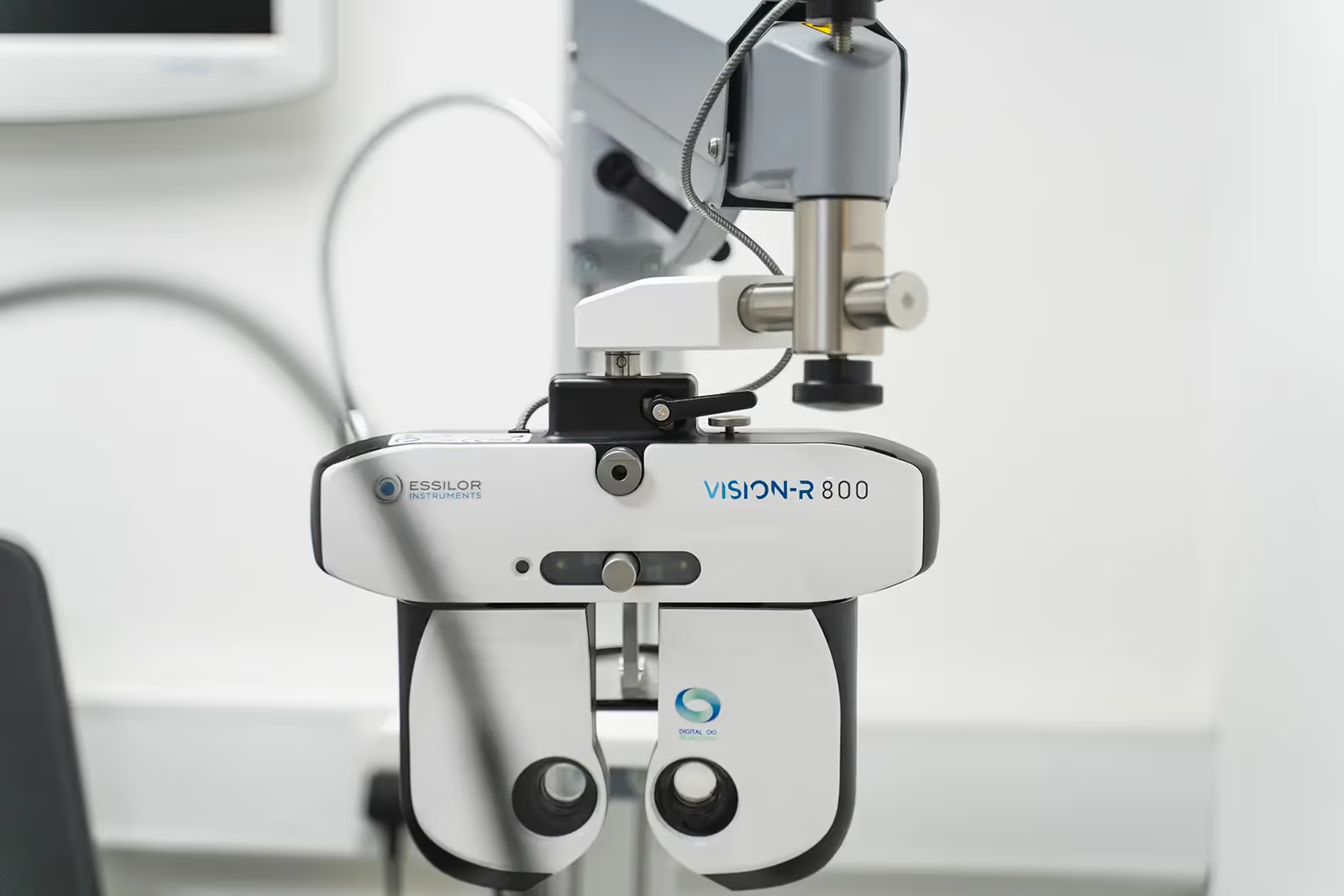
Experience superior vision with our high-quality bespoke Essilor lenses. Crafted for clarity and comfort, these lenses ensure optimal visual performance and eye protection.

Explore the convenience of our contact lens variety, ensuring clear vision and comfort tailored to your lifestyle for a seamless ocular journey.



.avif)


